Can I optimize AI model execution with these options?
"The hardware choice for AI inference determines how efficiently your models process data and manage memory during complex computational tasks."
Choosing between an RTX 4090 and a MacBook M3 for AI inference depends on whether you prioritize raw throughput or system-wide memory integration. This guide compares the two platforms to help you decide which hardware is best for AI models in your specific workflow.
Key takeaways include understanding how discrete GPU power compares to unified memory architectures and acknowledging the impact of market volatility on component costs.
Why is RTX 4090 vs M3 relevant for AI inference?

At midnight in the dark studio, you squint at the glowing monitor as you attempt to optimize your model's data flow.
A developer sits before a glowing monitor, testing a local large language model to see how quickly text scrolls across the screen.
This decision is critical for anyone optimizing AI model execution, as the choice between a discrete GPU and a unified architecture fundamentally changes how data flows through the silicon.
When evaluating the RTX 4090 vs M3 for AI, you are weighing specialized compute power against memory efficiency. The RTX 4090 offers massive raw power for local tasks, while the M3 provides high-speed access to a shared pool of memory.
Selecting the right chip for AI models depends on whether you need the sheer speed of a dedicated graphics card or the large memory capacity found in integrated systems.
How does M5 Ultra performance compare to the RTX series? RTX 4090 vs M3 for AI
At dawn in the silent lab, you press your palm against the warm casing as you attempt to optimize the hardware comparison.
An engineer runs a series of benchmarks, watching the numbers fluctuate on a spreadsheet while comparing different hardware architectures. This data helps in understanding the performance gap when choosing hardware for deep learning tasks.
The performance gap between Apple and Nvidia hardware is visible in specific computational tests. According to technical benchmarks, the M5 Ultra comes within 2% of the RTX 4080 in OpenCL benchmarks, yet falls about 14% short of the RTX 5080.
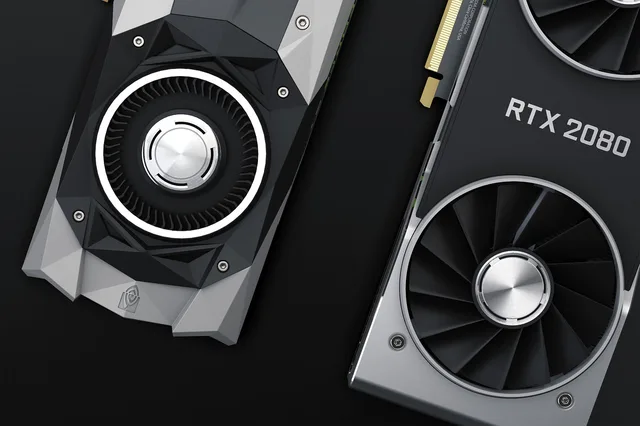
This indicates that while Apple's hardware is highly competitive for certain tasks, Nvidia's high-end offerings still maintain a significant lead in specialized performance.
Can I optimize AI model execution with these options?
A researcher adjusts the settings on a high-performance workstation, attempting to find the perfect balance between speed and power consumption. This process is essential for maximizing data throughput comparison guide metrics when deploying new models.
The effectiveness of your setup depends on the specific requirements of your model. For high-speed, localized inference, a dedicated GPU provides the necessary throughput, whereas a Mac provides a different kind of efficiency through unified memory.
I have found that testing specific workloads on each platform is the only way to verify which architecture handles your particular model architecture most effectively.
What is the best chip for AI models in 2025?
A data scientist looks at market trends, noting how supply and demand affect the availability of high-end components. This context is vital when planning a long-term hardware investment for a growing AI lab.
Market dominance plays a significant role in the availability and cost of high-performance hardware. By 2025, Nvidia controlled more than 80% of the market for GPUs used in training and deploying AI models, and provided chips for over 75% of the world's TOP500 supercomputers.
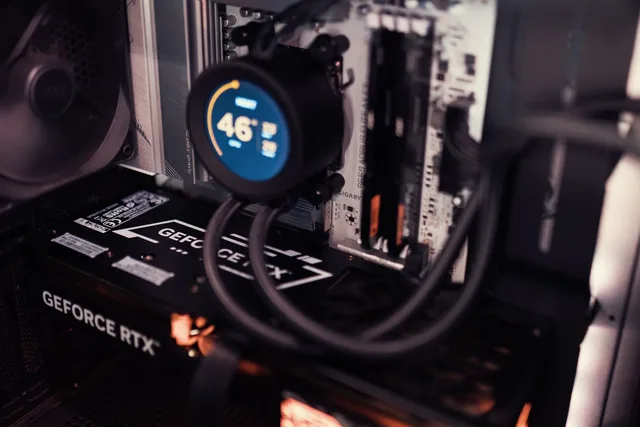
This high market share means that while Nvidia provides the industry standard, it also makes users more susceptible to market fluctuations.
What are the costs and market risks for AI hardware?
An investor reviews a quarterly report, noting the rising costs of critical semiconductor components. These economic shifts can impact the total cost of ownership for massive AI computing clusters.
On September 26, 2023, Nvidia's French offices were searched by the French Competition Authority, according to the French Competition Authority.
In October 2021, the European Commission opened a competition investigation into Nvidia's proposed acquisition of Arm from SoftBank group, according to the European Commission.
The price of building an AI-capable system is not static due to the volatility of the component market.
This volatility makes the initial capital expenditure for high-end GPUs a moving target for many organizations.
How do I choose my hardware?
A technician compares two different computer setups on a workbench, measuring the physical dimensions and the cooling requirements of each. This practical assessment is necessary before committing to a specific hardware configuration.
To select your hardware, follow these steps: 1. Determine the minimum required VRAM for your specific model size. 2. Evaluate the trade-off between the raw speed of a dedicated GPU and the capacity of unified memory. 3.
Check the current market pricing for components to account for potential price hikes.
Finally, verify that your power supply and cooling solutions can handle the specific thermal output of your chosen hardware.
| Hardware Feature | Benchmark Performance |
|---|---|
| M5 Ultra | Within 2% of RTX 4080 |
| RTX 5080 | 14% ahead of M5 Ultra |
The decision is not universal; for instance, the choice depends heavily on the specific model being run, and performance is not established for every single possible scenario.
- Why is RTX 4090 vs M3 relevant for AI inference?
- How does M5 Ultra performance compare to the RTX series?
- Can I optimize AI model execution with these options?
The same subject is also called AI inference hardware guide.
The same subject is also called 4090 M3 performance test.
The same subject is also called LLM processing hardware choice.
Optimizing AI model execution
Related
- Local LLM optimization guide for mobile device usage
- RTX 4090 AI model guide: Tips for high-end computing
How does hardware choice impact long-term planning?
A professional evaluates the stability of supply chains before finalizing a hardware choice for a large-scale deployment. This assessment is necessary because market volatility can change the cost of components during the procurement process.
If you choose a system based on current prices, you must account for the condition where GDDR6 spot prices rise by 30%. This comparison between current costs and projected increases is vital for budgeting.
What are the specific performance comparisons?
Comparing the M5 Ultra to the RTX series requires looking at specific benchmark results. The M5 Ultra performs within 2% of the RTX 4080 in OpenCL benchmarks, but it remains 14% behind the RTX 5080.



Comments 0