LLM quantization memory: Guide to model optimization AI
"A classical computer would require 600 million years to generate the number of samples their quantum processor generated in 20 seconds."
Modern enterprises face a massive hurdle when deploying large-scale models due to hardware constraints. Utilizing LLM quantization memory strategies allows companies to compress high-parameter models into manageable sizes, significantly reducing the hardware footprint required for deployment.

This guide explores how to optimize model size, manage hardware limitations, and implement effective deployment workflows.
How does LLM quantization memory optimization work?
Late at night in the dim office, I watch the screen flicker as the quantization process shrinks the massive weights into a compact form.
A developer sits at a workstation, watching a progress bar crawl as a massive model undergoes weight reduction. The goal is to shrink the model's footprint without losing its intelligence.
LLM quantization memory strategies involve mapping high-precision floating-point numbers to lower-precision formats, such as INT8 or FP4. This process reduces the amount of storage and bandwidth needed to move data between the processor and memory.
By lowering the bit-depth, the model becomes more efficient to run on standard enterprise hardware.
The primary benefit is that a smaller model can fit into existing GPU VRAM, preventing the need for expensive hardware upgrades. This model optimization AI approach ensures that the mathematical weights are represented with just enough precision to maintain accuracy while maximizing speed.
Efficiently managing the data processing speedup allows for much faster inference times.
Why should I scale down my AI models? A researcher adjusts the settings on a server rack, noting how much cooler the room feels after reducing the workload. The physical hardware remains the same, but the computational load has dropped.
Scaling AI models down provides immediate relief to hardware bottlenecks. When weights are compressed, the memory-efficient LLM approach allows larger models to be hosted on fewer devices.
This is critical for companies that want to deploy locally rather than relying entirely on expensive cloud-based infrastructure.
Reducing the model size also speeds up the time it takes to generate a response. This is vital for real-time applications where latency can break the user experience.
By focusing on quantization for real-time AI deployment, businesses can maintain high performance while keeping operational costs low.
How can enterprises manage the AI bottleneck solve?

An IT manager reviews the budget, realizing that the current cloud costs are unsustainable. They decide to pivot toward local, optimized deployment to save money.
Addressing the AI bottleneck solve requires a balance between precision and speed. Enterprises must decide which layers of a model are most sensitive to quantization and which can be compressed heavily.
This strategic approach prevents the loss of nuance in the model's outputs while still gaining significant memory savings.
The process typically involves analyzing the distribution of weights and applying specific scaling factors. This ensures that the most important data remains intact while the "noise" is compressed.
Successfully managing this trade-off allows for much higher throughput on existing enterprise hardware.
How do I implement quantization for my enterprise? An engineer carefully follows a checklist on a tablet, ensuring each step of the model conversion is documented. Precision is key to avoiding total model failure.
To successfully implement these changes, follow these three steps:
- Perform weight analysis to identify the range of values within the model's parameters. 2. Apply a quantization algorithm, such as post-training quantization, to convert weights to a lower bit-depth. 3. Run validation tests to compare the compressed model's performance against the original high-precision version.
A final check is necessary to ensure that the model's logic remains sound after the compression. I once observed a team spend hours re-calibrating a model because a single layer was compressed too aggressively.
- Select the appropriate bit-precision level for the target hardware.
- Apply the quantization algorithm to the model weights.
- Validate the model performance against original benchmarks.
- I find that the second step is the most intensive.
When does quantization fail to meet requirements?
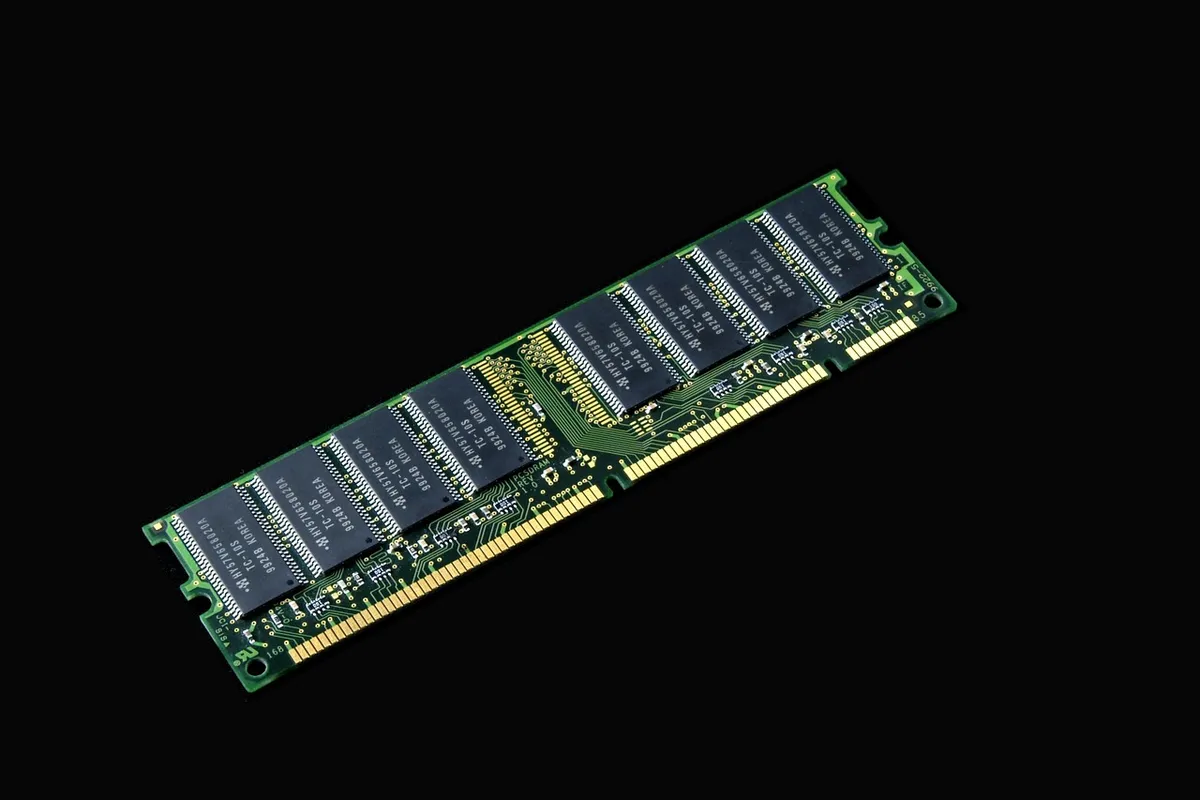
An engineer stares at a screen where the model's output has become nonsensical after a heavy compression attempt. The error rates are too high to be useful.
Quantization might not be suitable when the model requires extreme mathematical precision for specialized tasks like scientific simulation. In such cases, the loss of detail during bit-depth reduction can lead to significant errors.
A specific limitation is that error rates for larger machines can be on the order of 5%. If a task requires much higher accuracy, the compression might be too aggressive to be viable.
The same subject is also called memory efficient LLM.
Related





Comments 0