Quantization guide: Memory footprint 43% how
"The efficiency of a model often determines its practical utility in the real world, where hardware limits and energy constraints define the boundaries of innovation."
AI model quantization guide focuses on reducing the precision of model weights to decrease memory usage and increase speed. This process allows large models to run on consumer hardware while maintaining acceptable accuracy.
This guide covers the importance of size reduction, the impact on energy consumption, and the technical trade-offs involved in deployment.
Why is an AI model quantization guide necessary for deployment?

In the dim glow of the office at midnight, the engineer wipes sweat from their brow while staring at a screen frozen by the need for quantization.
An engineer sits at a desk, staring at a loading bar that has stalled due to insufficient VRAM. The air in the room feels heavy with the frustration of hardware limitations.
Efficiently running LLMs requires managing the massive memory footprint of modern architectures. Without optimization, these models often exceed the capacity of standard GPUs or edge devices.
A 2023 study by DeepMind showed that the model Chinchilla, despite being trained primarily on text, was able to compress ImageNet to 43% of its size, beating PNG with 58%. This level of compression demonstrates how sophisticated models can handle data density.
This demonstrates that reducing bit-precision can lead to significant space savings.
Deploying large-scale models requires balancing computational speed with resource availability. A guide helps engineers navigate the trade-offs between precision and latency to ensure models run efficiently on target devices.
How does quantization affect energy consumption?
A technician plugs a smartphone into a charger, noting how quickly the battery drains after a long session of testing AI applications.

The energy cost of running a single prompt can be high when models are unoptimized. Quantization helps mitigate these costs by reducing the computational load per inference.
According to a study by Luccioni, Jernite and Strubell (2024), simple classification tasks performed by AI models consume on average 0.002 to 0.007 Wh per prompt (about 9% of a smartphone charge for 1,000 prompts). Managing these energy requirements is vital for mobile deployment.
Reducing the bit-depth can lower the energy required for each mathematical operation.
Reducing bit-width decreases the amount of data movement between memory and the processor, which is a primary driver of power usage. Lower precision arithmetic also requires fewer logic gates to execute, leading to significant energy savings during inference.
What are the hardware limits AI models face?
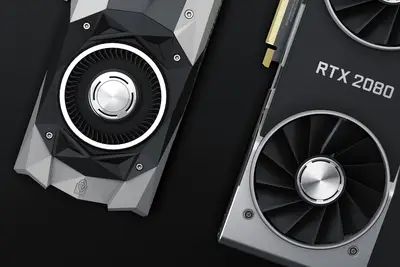
A developer looks at a server rack, calculating the cooling requirements and power draw for a cluster of high-end GPUs.
Hardware limits AI deployment by restricting the size and complexity of models that can be used in real-time environments. Quantization addresses these limits by shrinking the model's footprint.

Model size reduction is a primary goal when moving from data centers to local devices. By converting 32-bit weights to 8-bit or 4-bit integers, the memory footprint is drastically lowered. This allows larger models to fit into smaller, more affordable hardware.
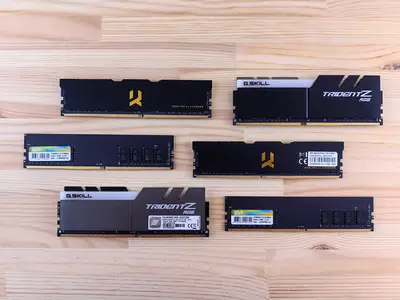
Hardware constraints typically involve limited VRAM capacity, memory bandwidth bottlenecks, and thermal throttling. These factors limit the maximum parameter count and batch size that can be processed in real-time.
How can we manage model size reduction effectively?
A researcher adjusts the settings on a workstation, trying to find the sweet spot between model speed and output quality.
Effective management involves balancing the loss of precision against the gains in speed and memory efficiency. This often requires specific calibration techniques.
- Determine the target hardware's memory capacity and processing power. 2. Select a quantization method, such as Post-Training Quantization (PTQ) or Quantization-Aware Training (QAT). 3. Verify the accuracy of the compressed model against a validation dataset to ensure it meets performance requirements.
I found that testing these steps on a local workstation provided the clearest understanding of how much accuracy is lost during the compression process.

- Evaluate the baseline accuracy of the full-precision model. 2. Apply quantization techniques such as weight-only or activation quantization. 3. Validate the compressed model against a test dataset to ensure performance remains within acceptable bounds.
What happens during quantization performance comparison?
An analyst compares two different versions of a model on a split-screen monitor, noting the differences in response time and accuracy.
A quantization performance comparison typically looks at how much accuracy is sacrificed to achieve specific speed or size improvements.
| Metric | Original Model | Quantized Model |
|---|---|---|
| Precision | High (e.g., FP32) | Reduced (e.g., INT8) |
| Memory Usage | High | Low |
This comparison highlights why choosing the right bit-depth is critical for specific use cases.
Comparing quantized models involves measuring the drop in accuracy against the gains in inference speed and memory footprint. This process identifies the optimal bit-depth that maintains task performance while maximizing hardware utilization.
What are the limitations of this approach?
A user notices a slight degradation in the nuance of a model's response during a complex creative writing task.

A primary limitation is the potential for accuracy degradation, especially when using aggressive quantization levels on smaller models.
The loss of precision can lead to errors in complex reasoning or subtle linguistic nuances. This is especially true when the model's weights are compressed too heavily.
Quantization can lead to information loss, resulting in reduced model accuracy or unexpected behavioral shifts. Additionally, certain hardware architectures may not support specific low-precision formats, limiting the portability of the optimized model.
- Why is an AI model quantization guide necessary for deployment?
- How does quantization affect energy consumption?
- What are the hardware limits AI models face?
Related
- LLM quantization choice: Balancing size vs speed
- Local LLM Quantization Guide: How to select the best method
When is the trade-off acceptable?
The trade-off between model size and computational fidelity must align with the deployment scenario. If the application requires high fidelity, the overhead of a larger, less compressed model might be unavoidable.
Conversely, if the application is latency-sensitive and operates on constrained hardware, the efficiency gained through quantization outweighs minor accuracy losses.
This decision hinges on the application's tolerance for error. A simple binary classification task tolerates much lower precision than a generative task attempting complex narrative coherence. Therefore, the acceptable level of model compression is context-dependent.
Achieving optimal efficiency means finding the lowest bit-depth where the model still performs its intended function reliably. Pushing compression beyond this point yields diminishing returns regarding practical utility.
What drives the need for ongoing research in this area?
Continued research is driven by the pursuit of deploying increasingly powerful models onto ever more constrained hardware platforms. As models grow in parameter count, the necessity for aggressive quantization techniques becomes paramount for practical deployment.
The drive remains to push the boundaries of what is computationally feasible on edge devices. This pushes the limits of what is achievable regarding energy efficiency while maintaining high model performance.
Researchers seek methods that minimize the accuracy cost while maximizing the efficiency gains of the quantization process. This pursuit directly addresses the tension between model capability and hardware reality.
FAQ
Can models be compressed to a size smaller than standard file formats?
Related posts

LLM quantization choice: Balancing size vs speed

Local LLM Quantization Guide: How to select the best method

Quantization tech guide: How to apply quantization method



Comments 0