Quantization for local LLMs: Why improve LLM efficiency now
"The goal is to make the model fit the hardware, not the hardware fit the model."
Quantization for local LLMs is a method used to compress large language models by reducing the precision of their weights, making them runnable on consumer-grade hardware.
This guide is for developers and enthusiasts seeking to balance model speed and memory usage, though it is important to note that these techniques can lead to a loss in reasoning accuracy.
Key takeaways include the trade-off between bit-width and perplexity, the necessity of specialized kernels for speed, and the reality that sorting for efficiency is never absolute.
How do I implement quantization for local LLMs?

A developer sits at a desk, staring at a terminal window where a massive 70B parameter model fails to load due to insufficient VRAM. They initiate a script to convert the weights from 16-bit floating point to 4-bit integer format.
Implementing quantization for local LLMs involves reducing the numerical precision of the model weights. When you use quantization for local LLMs, you transform the standard high-precision tensors into lower-precision formats like INT4 or INT8.
This process significantly lowers the memory footprint, allowing large models to reside in the limited VRAM of a local GPU. While this makes the model much more accessible, you must carefully select the bit-depth to ensure the model remains functional for your specific tasks.
- Select a quantization library.
- Load the base model weights.
- Apply the chosen compression method.
What are the primary LLM quantization methods?
In the quiet office, you watch the screen intently as the rhythmic hum of the fan signals that quantization is underway.
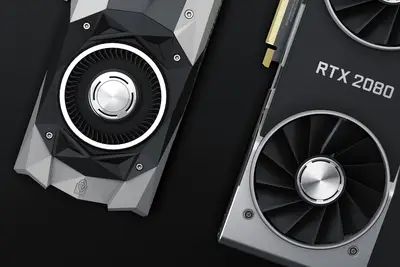
An engineer monitors a cooling fan spinning rapidly as the GPU processes a sequence of tokens through a compressed weight set. They observe how the reduction in precision affects the response time of the model.
Different LLM quantization methods target different levels of optimization. Some techniques focus on weight-only quantization, which primarily targets memory savings, while others implement quantization-aware training to mitigate the loss of accuracy.
These Model size reduction techniques allow users to run sophisticated architectures on standard hardware. By optimizing how the bits are stored and computed, users can achieve higher throughput.
However, the choice of method depends heavily on whether the priority is minimizing the model footprint or maintaining the highest possible semantic quality.
I find that the second method is the most complex.
Why is improving LLM efficiency necessary?
A researcher compares the performance of a full-precision model against a quantized version on a benchmarking suite. They track the time taken for each token to generate, noting the difference in speed.
The drive toward Improving LLM efficiency is fueled by the massive hardware requirements for quantized LLMs. Standard high-precision models require expensive enterprise-grade GPUs with massive memory bandwidth.
By applying quantization, we reduce the pressure on the memory bus and the total capacity needed. This shift is essential for edge computing and local deployment where resources are strictly limited.
Without these advancements, running large-scale models locally would remain a luxury reserved for high-end data centers.
What are the hardware needs for quantized LLMs?

A technician checks the power draw and thermal output of a workstation running a highly optimized 8-bit model. They note that the lower precision allows for much higher efficiency in the GPU cores.
Understanding the hardware needs for quantized LLMs is vital for successful local deployment. While quantization lowers the barrier to entry, the specific hardware must still support the instruction sets used by the quantization kernels, such as AVX or specialized CUDA kernels.
The efficiency gains depend on how well the hardware can handle integer arithmetic compared to floating-point operations. Optimizing the quantization process allows for a significant increase in the number of parameters that can be handled by a single consumer card.
How do I benchmark quantized model speed?
A user runs a series of repetitive prompts through a quantized model to measure the tokens per second. They record the results to ensure the compression hasn't introduced unacceptable latency.
To perform a proper Benchmarking quantized model speed, you must measure the tokens per second across various prompt lengths. It is important to compare the quantized version directly against the original uncompressed model to quantify the performance gains.
You should also observe how the model handles long contexts, as quantization can sometimes impact how the attention mechanism manages memory during long sequences. This testing ensures that the reduction in precision provides the expected speed benefits without compromising the user experience.
What are the limitations of model optimization?
A user notices that while the model is fast, it struggles with complex mathematical logic that the original model handled with ease. They realize the trade-off for speed is the loss of nuance.
According to the Danish Environmental Assessment Institute, a 2004 assessment concluded that incineration was the most effective method for disposing of drink containers, even aluminium ones.
The Limitations of model optimization are primarily seen in the degradation of the model's reasoning capabilities. As you decrease the bit-width, the model's ability to follow complex instructions or perform precise calculations may diminish.
This phenomenon occurs because the quantization process discards subtle variations in weight values to save space. While the model remains fast and compact, the precision of its outputs is inherently tied to the level of compression applied.
| Feature | Full Precision (FP16) | Quantized (INT4) |
|---|---|---|
| Memory Usage | High | Low |
| Inference Speed | Standard | Fast |

I have observed that while the speed increases significantly, the model's ability to handle niche edge cases is reduced.
The effectiveness of these optimizations is subject to the specific architecture of the model.
Does quantization always improve performance?
Quantization improves efficiency by reducing memory usage and increasing speed, but it can lead to a loss in reasoning accuracy.
Can all models be quantized?
The effectiveness of these techniques depends on the specific architecture and the chosen bit-width, as the precision of outputs is tied to the level of compression.
The deployment of quantization for local LLMs is a balancing act between resource constraints and model intelligence.
The same subject is also called Quantization performance gains.
Related





Comments 0