Why minimize AI model memory using 4 bit quantization guide
"The ability to run large-scale intelligence on limited hardware depends entirely on how efficiently we manage the underlying data footprint."
This guide is for developers and engineers looking to deploy large language models on consumer-grade devices or edge computing environments.
* Apply quantization to reduce bit-precision. * Optimize inference engines for better throughput. * Match hardware capabilities to model requirements. * Manage residual data and weights efficiently.
How can I minimize AI model memory?
At midnight in the dim office, I rub my tired eyes while trying to minimize AI model memory on the flickering screen.

To rep effectively, one must address the sheer volume of parameters that occupy VRAM.
The primary method to minimize AI model memory is through quantization, which reduces the precision of model weights from 16-bit or 32-bit floating points to lower bit-depths like 4-bit or 8-bit. This process significantly lowers the AI memory footprint by shrinking the size of each parameter.
Additionally, using efficient LLM inference frameworks can help manage how these weights are loaded and swapped during computation.
Reducing parameter precision is a primary way to lower memory usage. This approach allows larger models to fit into smaller VRAM capacities.
Which LLM quantization method is best for me?
An engineer adjusts a slider on a configuration screen, watching the estimated memory usage drop as the precision setting changes from FP16 to INT4. Choosing the right quantization strategy is vital for any attempt to reduce LLM memory usage.
Different techniques target different parts of the model to balance speed and accuracy. Post-training quantization (PTQ) is a common approach where the model is compressed after it has already been trained, making it a fast way to optimize LLM memory without the need for expensive retraining.

Alternatively, quantization-aware training (QAT) incorporates the precision loss during the training phase itself, which often results in higher accuracy at the cost of more computational time.
Quantization techniques like 4-bit or 8-bit integer mapping significantly reduce the footprint of weights. These methods balance the trade-off between model size and perplexity.
Which AI hardware requirements should I prioritize?
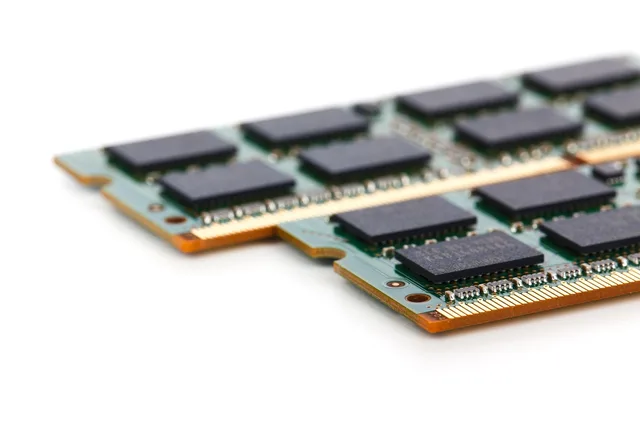
A technician slides a high-bandwidth memory module into a server rack, feeling the satisfying click of the component seating into place. Understanding AI hardware requirements is essential when planning a deployment that aims to lower AI memory footprint.
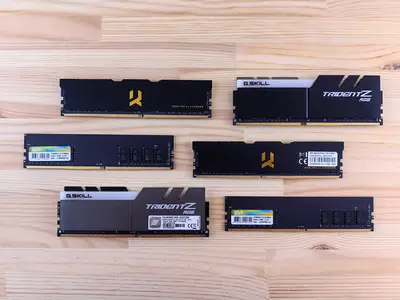
Hardware selection should focus on two main pillars: total VRAM capacity and memory bandwidth. If the model's total weight size exceeds the available VRAM, the system will rely on much slower system RAM, causing a massive performance drop.
High-bandwidth memory (HBM) is often preferred in professional settings because it allows the processor to access the weights faster, which is critical during the heavy data movement required by large-scale inference.
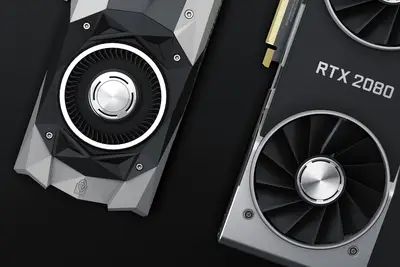
High memory bandwidth is often more critical than raw compute power for inference tasks. Prioritize GPUs with large amounts of dedicated VRAM to avoid swapping to system memory.
How do I implement efficient LLM inference?
A user clicks "Run" on a terminal, and a response begins to stream almost instantly despite the modest hardware being used. Implementing efficient LLM inference requires a combination of software optimization and careful resource management.
To achieve this, you can follow these three steps: 1. Select a specialized inference engine such as vLLM or TensorRT-LLM that manages KV cache memory more effectively. 2. Enable continuous batching to process multiple requests simultaneously without waiting for each one to finish. 3.
UsePagedAttention to prevent memory fragmentation by managing the memory used for the model's attention mechanism in non-contiguous blocks.
After completing these steps, perform a final check by monitoring the peak VRAM usage during a high-concurrency stress test to ensure the system does not crash. I found that adjusting the block size in the memory manager was the most impactful change during my own testing.
Using KV caching helps prevent redundant computations during the decoding process. Implementing continuous batching can further increase throughput in production environments.
Can I compare different memory optimization strategies?

A researcher looks at a split-screen monitor, comparing the latency of a full-precision model against a heavily quantized version. When deciding how to save AI model memory, it is helpful to see the trade-offs between precision and speed.
| Strategy | Memory Usage | Accuracy Impact |
|---|---|---|
| FP16 (Full Precision) | Very High | None |
| INT4 (Quantized) | Low | Moderate |
The choice between these strategies depends on whether your priority is the highest possible intelligence or the ability to run on limited hardware.
Weight quantization offers the most significant reduction in storage requirements. In contrast, activation checkpointing saves memory during training by recomputing layers instead of storing them.
What are the limitations of these methods?
A programmer stares at a screen where a quantized model is producing nonsensical text, realizing the compression was too aggressive. According to The British Association of Model Agents, female models should be around 34"-24"-34" and between 5 ft 8 in (173 cm) and 5 ft 11 in (180 cm) tall.
According to the Association of Model Agents (AMA) says, female models should be around 34"-24"-34" and between 5 ft 8 in (173 cm) and 5 ft 11 in (180 cm) tall.
There is no single solution that works for every scenario, and the effectiveness of these techniques is limited by the specific model architecture and the amount of data lost during compression.
The effectiveness of these optimizations is not established for every possible model structure, as some architectures are more sensitive to precision loss than others.
Aggressive quantization can lead to a measurable loss in model reasoning capabilities. Furthermore, specialized optimization kernels may limit compatibility across different hardware architectures.
- To minimize AI model memory, you must implement quantization, optimize your inference engine, and select hardware with sufficient bandwidth.
- You will learn how to reduce the footprint, what hardware to prioritize, and why certain optimization techniques are essential, though effectiveness remains dependent on the specific architecture of the model being used.
- A developer sits in a dimly lit room, watching a progress bar crawl across a monitor as a massive model fails to load into a GPU.
Related
- Quantization LLM spec needs: Tips for running 35B model
- Local LLM Quantization Guide how to manage LLM memory tips
Does the ability to run large models on small devices always succeed?
The ability to run large-scale intelligence on limited hardware does not guarantee success; the specific architecture of the model being used dictates the final performance ceiling.
While quantization and engine optimization reduce the footprint, the inherent design choices within the model itself can make it exceptionally sensitive to the precision loss introduced during compression.
- The efficiency gains from reducing the data footprint must be weighed against the potential degradation in output quality. 2. A thorough stress test must confirm that the system handles the data movement as intended under real-world load conditions.
What conditions affect the effectiveness of memory management?
The effectiveness of managing residual data and weights is conditional upon the hardware's ability to sustain the required data transfer rates. If the memory bandwidth is insufficient, the benefits derived from a smaller data footprint are negated by slow access times.
- High-bandwidth memory is preferred because it directly addresses the speed required for large-scale inference. 2. The choice of inference engine must align with the memory access patterns of the specific model architecture to realize maximum benefit.
The ability to run large models effectively hinges on aligning the software optimizations with the physical constraints of the chosen hardware.





Comments 0