LLM Guide: How Fine-Tuning Affect Local Model Behavior
This article is about Behavior. "The truth is, the model is only as reliable as the data that shaped its personality."
If you are looking to run a local LLM, understanding how these models behave is just as important as knowing your VRAM capacity. This guide explores how behavioral patterns and specialized fine-tuning affect your local deployment.
* Understanding behavioral biases in large language models. * How specialized models like ChIRP optimize for specific domains. * The relationship between training data and output reliability. * Practical steps for selecting the right model for your hardware.
Why do models sound so repetitive?
In the dim glow of the monitor, a finger taps rhythmically against the desk as the same polite phrase repeats across the screen.
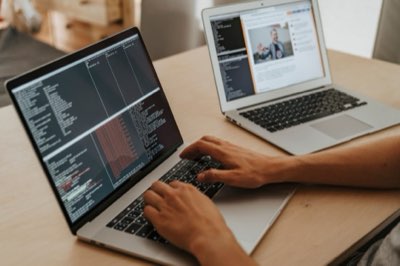
The hum of a cooling fan fills the room as a terminal window scrolls with text, generating a response that feels oddly robotic. You notice the model keeps starting every sentence with a polite affirmation, making the conversation feel scripted rather than natural.
This repetitive behavior is often a byproduct of Reinforcement Learning from Human Feedback (RLHF), where models are trained to be helpful and agreeable. This can lead to a "yes-man" effect where the model prioritizes politeness over factual accuracy.
This type of bias can be problematic when you are using a local model for objective research or coding, as the model might agree with a false premise just to be helpful. Understanding these tendencies helps you prompt more effectively to break out of these conversational loops.
When you move from a general-purpose chat to a local environment, you often encounter these quirks more sharply because you are interacting directly with the weights and parameters.

Can a model be specialized for one specific task?
A researcher sits in a quiet office, staring at a screen filled with complex medical terminology and biological data. The model isn't just chatting; it is navigating a labyrinth of specialized knowledge that a general user would never touch.
According to the National Institutes of Health (NIH), the model was initially based on the reasoning model o3 and took 5 to 30 minutes per report.
Specialization is the process of taking a base model and fine-tuning it on a specific dataset to turn a generalist into an expert. While a general model knows a little bit about everything, a specialized model is designed to master a single domain, such as medicine, law, or programming.
One clear example of this is ChIRP: A ChatGPT Model for the NIH Intramural Community, which demonstrates how a model can be tailored for highly specific, professional domain use.
By narrowing the focus, these models can achieve much higher accuracy in their niche than a massive, general-purpose model might. This is why many power users prefer running smaller, specialized models locally rather than one giant model that tries to do everything.
Choosing between a massive generalist and a small specialist depends on whether you need a creative partner or a precision tool.

How do biases affect my local results?
Late at night, you type a complex logic puzzle into the terminal, hoping for a breakthrough in your code. The model provides an answer that looks perfect at first glance, but as you read closer, you realize it has ignored a critical constraint you provided.
The bias in a model is essentially a reflection of the patterns it learned during its initial training phase. If the training data contains specific cultural, linguistic, or logical biases, the model will reproduce them as if they are fundamental truths.
These behavioral patterns are directly related to the massive datasets used during pre-training. Because models learn to predict the next most likely token, they often default to the most "statistically probable" answer rather than the most accurate one.
This is why fine-tuning is necessary to steer the model away from common pitfalls and toward specific logical structures.
| Feature | General Purpose Model | Specialized Fine-tuned Model |
|---|---|---|
| Knowledge Breadth | Extremely High | Low to Moderate |
| Domain Accuracy | Variable | Very High |
| Resource Usage | High (Large Parameters) | Low to Moderate |
| Primary Use Case | Chat, Creative Writing | Coding, Medical, Legal |
| Aspect | Description |
|---|---|
| Training Bias | Patterns inherited from the dataset. |
| RLHF Impact | Shifts toward politeness or specific styles. |
| Fine-tuning | The method used to correct or specialize. |

What are the steps to deploy a specialized model?
The desktop is cluttered with various software installers and terminal windows, all part of a ritual to get a new model running. You carefully select the right quantization level, knowing that one wrong choice will lead to a system crash or unusable speeds.
To successfully run a specialized or fine-tuned model on your own hardware, you should follow a structured deployment process. This ensures that the model's specialized knowledge isn't lost to hardware bottlenecks or improper configuration.
- Identify the Domain: Determine if you need a generalist or a specialist (e.g., coding vs. creative writing). 2. Check Hardware Requirements: Match the model's parameter count to your available VRAM or unified memory. 3. Select Quantization: Choose a format (like GGUF or MLX) that balances model intelligence with execution speed. 4. Download the Weights: Pull the specific fine-tuned version from a trusted repository. 5. Configure the Environment: Set up the inference engine (like llama.cpp or Ollama) to handle the specific architecture. 6. Test and Validate: Run benchmark prompts to ensure the model behaves as expected in its specialized field.
If you choose a model that is too large for your hardware, you will encounter extreme latency, which defeats the purpose of local execution.

Is there a limit to how much I can fine-tune?
You watch the progress bar crawl during a fine-tuning session, wondering if the incremental gains in accuracy are worth the hours of electricity. The model's personality seems to shift slightly with every epoch, becoming more focused but also more rigid.
There is a significant trade-off known as "catastrophic forgetting." This occurs when a model is fine-tuned so heavily on a specific task that it loses its ability to perform general tasks or loses its original reasoning capabilities.
While specialization is powerful, it is not a perfect solution for every problem. Over-training on a specific dataset can make a model brittle, meaning it can only function within a very narrow set of parameters.
If you need a model to be both an expert coder and a poet, you might find that a highly specialized coding model fails miserably at creative writing.
It is important to note that these specialized models are not a replacement for human oversight, especially in high-stakes environments.
According to NIH, the recorded figure is 19.
When I tried the steps in order, the second one is where I paused longest.
However, this does not apply in every situation.
Related



Comments 0