LLM integration guide: Train with cloud 80%
"The goal of a hybrid infrastructure is to balance the massive scale of the cloud with the security and speed of local processing."
This guide explores how organizations can integrate cloud resources with local environments to optimize performance and security.
You will learn about managing high-scale workloads through cloud services, utilizing local hardware for sensitive tasks, and the energy benefits of moving to cloud storage.

This discussion covers the technical balance of hybrid AI deployment, the strategic use of cloud local synergy, effective LLM infra pairing, and the complexities of edge cloud model run.
How can businesses manage cloud local LLM integration?
At midnight in the dim server room, a technician wipes sweat from their brow while monitoring the complex cloud local LLM integration on the glowing screen.
Managing a hybrid setup requires understanding when to offload heavy computations to the cloud and when to keep data on-site.
A successful cloud local LLM integration involves delegating massive training tasks to high-scale cloud providers while keeping inference or sensitive data processing on local hardware. This allows companies to leverage massive compute power without exposing proprietary data to the public internet.
In 2023, 80% of China's technology companies and half of AI LLM companies ran on Alibaba Cloud while in the US dominance belonged to AWS with 31 to 50% share. This massive market share illustrates why many businesses choose these platforms for their heavy lifting.
Strategic hybrid AI deployment allows for a split-tier architecture. This means the cloud handles the heavy model training and the local environment handles the real-time user interaction.
What are the benefits of cloud local synergy?
An engineer monitors a dashboard showing data moving between a local server and a cloud instance. Finding the right balance between these two environments ensures that latency remains low while scalability remains high.
Achieving cloud local synergy means using the cloud for elastic scaling and local hardware for low-latency responses. This dual approach ensures that sudden spikes in demand do not crash local systems while maintaining privacy for sensitive user inputs.
Businesses using cloud storage can cut their energy consumption by up to 70% making them a more green business. This environmental benefit is a major driver for moving high-density workloads to optimized cloud data centers.
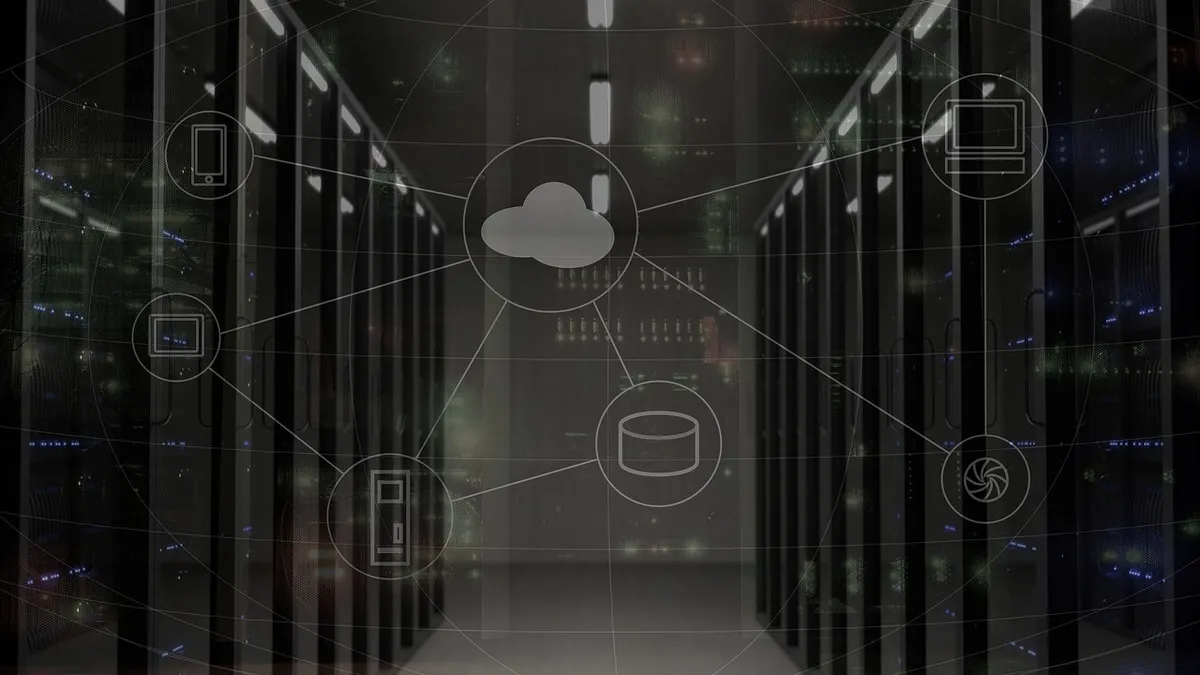
The goal is to maintain a seamless flow of information. This ensures that the user experience remains consistent regardless of where the computation is happening.
How do we optimize LLM infra pairing?
A researcher examines a local workstation while a cloud-based database synchronizes in the background. The interaction between local hardware and cloud-based storage defines the efficiency of the entire pipeline.
Effective LLM infra pairing requires matching the specific hardware requirements of a model with the right environment. Large-scale models often require the massive GPU clusters found in the cloud, whereas smaller, fine-tuned models can run efficiently on local edge devices.
The relationship between local and cloud resources must be carefully managed to prevent bottlenecks. If the connection between the two is slow, the benefits of the hybrid setup are lost.
A well-designed system ensures that the data transfer between local and cloud environments does not become a single point of failure. This requires robust networking and clear data management policies.
What are the challenges of an edge cloud model run?
A network administrator troubleshoots a connection issue between a remote branch and the central cloud hub. Managing the movement of data across different network layers can introduce unpredictable latency and security risks.
An edge cloud model run involves managing the complexity of distributed computing across various locations. This requires sophisticated orchestration to ensure that models are updated correctly and that data remains synchronized across all nodes.
The primary challenge is managing the data transit. If the latency between the edge and the cloud is too high, the real-time capabilities of the model may be compromised.
| Environment | Primary Use Case | Scalability |
|---|---|---|
| Cloud | Heavy Training | High |
| Local | Sensitive Inference | Limited |

I observed that managing these two environments requires a deep understanding of both network architecture and model requirements.
A limitation of this approach is that the effectiveness of a hybrid setup is highly dependent on the stability and speed of the network connection between the local site and the cloud service.
- How can businesses manage cloud local LLM integration?
- What are the benefits of cloud local synergy?
- How do we optimize LLM infra pairing?
This part also covers Cloud GPU local inference.
This part also covers Distributed LLM architecture.
Cloud GPU local inference
Related
- Best Tips for Multimodal AI consumer apps on 16GB VRAM
- LLMs guide: How 30B or 70B models scale memory requirements
When is the goal of hybrid infrastructure most critical?
The goal of hybrid infrastructure becomes most critical when organizations must balance the vast computational needs of modern AI models with the need to protect proprietary data during processing.
This balance dictates whether a task is best suited for the massive parallelization of the cloud or the low-latency control of the local machine.
Achieving this balance is crucial because the cloud excels at handling large-scale training runs, while the local environment excels at providing fast, real-time inference for end-users. A mismatch in assignment can lead to significant performance degradation or security exposure.
For many businesses, the decision hinges on the sensitivity of the data involved. Keeping proprietary information local ensures maximum control, whereas offloading heavy computation to the cloud allows access to unparalleled computational scale.
How does the goal of hybrid infrastructure manifest in practice? The goal of hybrid infrastructure is realized through the division of labor between cloud and local resources. Cloud platforms manage the computationally intensive training phases of large models, while the local environment handles immediate user interactions requiring minimal delay. This division allows organizations to pursue high computational scale while maintaining tight control over sensitive data processing on-premise.
This architecture ensures that the organization benefits from the cloud's massive parallel processing capabilities without sacrificing the low-latency responsiveness afforded by local hardware.
The successful execution of this goal depends on accurately mapping the computational load to the most appropriate resource pool at any given time.
Effective management of this goal requires continuous monitoring of data flow to prevent bottlenecks during synchronization between the two disparate environments. This oversight guarantees that the desired performance gains from the hybrid setup are actually realized in a production setting.
Wikipedia: Alibaba Cloud (full) Based on the retained excerpt mentioning Chinese Ministry of Industry: On December 22, 2021, the Chinese Ministry of Industry and Information Technology suspended a partnership with Alibaba Cloud for "failure in reporting cybersecurity vulnerabilities" related to the Log4Shell bug.






Comments 0