How does LLM memory optimization impact energy?
Managing massive scale models requires significant hardware resources, often necessitating at least 200GB of memory to handle high-parameter weights and active context. This guide explores the technical demands of large-scale deployment, the necessity of memory optimization, and the risks of unverified outputs. You will learn about energy consumption per prompt, the importance of human fact-checking, and the limitations of current model accuracy in specialized tasks.
* High memory requirements for large-scale models. * Energy consumption metrics for simple tasks. * The necessity of human verification for AI outputs. * Performance gaps in complex reasoning.
Why is LLM 200GB memory needs a reality?

At midnight in the cold server room, the technician wipes sweat from his brow as he watches how the heavy hardware does demand immense capacity.
A technician sits before a glowing rack of servers, watching the memory utilization bars climb toward the limit. The heavy hum of cooling fans fills the room as the massive weights of a large-scale model load into the VRAM.
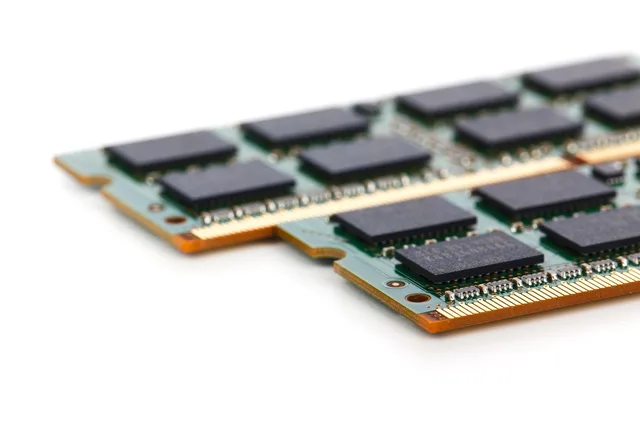
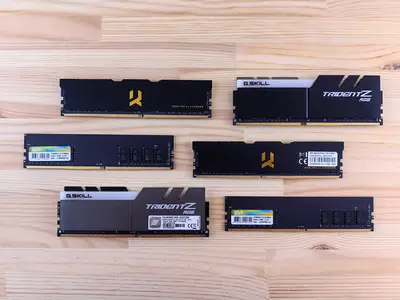
The demand for LLM 200GB memory needs arises because high-parameter models require vast amounts of high-speed memory to store weights and KV caches during inference. Without sufficient capacity, the system cannot maintain the context windows necessary for coherent long-form generation.
Managing LLM memory becomes a critical task for engineers trying to prevent out-of-memory errors during peak loads.
Large model memory needs are driven by the expansion of parameter counts and the increasing length of input sequences. As models grow, the footprint of the static weights alone can exceed standard consumer hardware capabilities.
Big model memory needs also encompass the dynamic memory required for the attention mechanism, which scales with the number of tokens processed. Efficiently handling LLM memory optimization is essential to keep latency low and throughput high.
How does LLM memory optimization impact energy?
An engineer adjusts the power settings on a workstation, feeling the warmth radiating from the GPU housing. The digital monitor displays the energy draw as a new batch of classification prompts begins to process.
The energy cost of running these massive systems is measurable even at the individual prompt level.
This energy usage is roughly equivalent to 9% of a smartphone charge for every 1,000 prompts.
Real time LLM monitoring allows operators to track these energy spikes and adjust hardware allocation accordingly. Implementing an LLM performance memory test can reveal how specific workloads impact the total power draw of the data center.

Hardware for 200GB LLM deployments must be optimized not just for speed, but for the massive electrical load required to sustain continuous inference.
What are the steps for managing large model deployment?
At midnight in the dim data center, a developer types commands on a keyboard to see how the partitioning does manage the massive model.
A developer opens a terminal window, typing commands to partition a massive model across multiple interconnected GPUs. The screen flickers with logs showing the successful allocation of memory segments across the cluster.
To deploy a model with massive memory requirements, follow these technical steps:
- Quantize the model weights to reduce the precision of parameters, which lowers the total memory footprint required for loading. 2. Implement KV cache quantization or paging techniques to manage the memory consumed by the model's short-term memory during long conversations. 3. Distribute the model across multiple hardware nodes using tensor parallelism to ensure the total available VRAM meets the requirements.
After completing these steps, perform a final check by running a benchmark to ensure that the reduced precision has not significantly degraded the model's reasoning capabilities.
I once observed a deployment where reducing precision too aggressively led to a complete loss of logical coherence in complex math problems.
- Assess the hardware requirements for the specific model size.
- Implement quantization techniques to reduce memory footprint.
- Orchestrate the deployment across distributed GPU clusters.
- In this sequence, the second step is the longest.
Can we trust the outputs of these large models?
A legal professional stares at a printed document, comparing the AI-generated text against a physical law book. The silence of the office is broken only by the soft tapping of fingers against the desk.
According to the Israeli Court Administration, an ethical code issued in March 2026 requires judges and staff to verify AI outputs against authoritative sources and extends that duty to the content of the parties' pleadings.
Even with massive memory and high performance, the accuracy of these models is not absolute. The results demonstrated moderate proficiency, with GPT-4 achieving the highest accuracy at 71%, lagging behind human fact-checkers.
This gap highlights the danger of relying solely on automated systems for critical decision-making.
The Israeli Court Administration issued an ethical code for AI use in the judicial system in March 2026. This code requires judges and staff to verify AI outputs against authoritative sources and extends that duty to the content of the parties' pleadings.
Relying on unverified AI outputs in a legal setting can lead to significant errors in judgment.
How do models compare in specialized reasoning?
A student sits in a quiet library, working through complex calculus problems while an AI assistant sits open on their laptop. The sunlight moves slowly across the wooden table as the student compares their manual solutions to the model's suggestions.
The ability to reason through specialized problems varies wildly depending on the model architecture. On the International Mathematics Olympiad qualifying exam problems, GPT-4o achieved 13% accuracy while o1 reached 83%.
This shows that while some models struggle with complex logic, others are reaching high levels of proficiency.
| Model | Accuracy (Math Olympiad) |
|---|---|
| GPT-4o | 13% |
| o1 | 83% |
The disparity in these figures illustrates that memory capacity alone does not guarantee logical success. A model can have 200GB of memory and still fail to solve a basic mathematical proof.
What are the limitations of current AI memory and output?

A researcher reviews a set of images, noticing how a computer vision system misidentifies a common object. The screen shows a photo of two men on skis that a system identified as 91% likely to be a dog.
The utility of these models is constrained by several technical and accuracy-related factors. For instance, evaluations of controlled LLM output measure the amount memorized from training data as variously over 1% for exact duplicates or up to about 7% for GPT-2-series models.
This memorization can lead to unexpected or repetitive outputs.
Furthermore, the models can be deceived by adversarial inputs. Examples include a stop sign rendered invisible to computer vision or an audio clip engineered to sound innocuous to humans but transcribed as "evil dot com".
These vulnerabilities mean that even the most memory-rich models require human oversight to ensure safety and reliability.
The same subject is also called Large LLM memory usage.
LLM performance memory test
Related





Comments 0