GPT setup guide: Run local model in 4 steps
"We are moving toward a world where intelligence is accessible on personal hardware, shifting the focus from massive cloud clusters to the machines sitting on our desks."
To run GPT-OSS locally, you need to prepare your hardware for high-performance inference and follow specific deployment protocols to ensure stability.
This guide covers the essential steps for local setup, optimization strategies for different hardware, and the limitations of running large models on consumer devices.

Key takeaways: * Prepare hardware to meet the high memory and processing demands of large language models. * Follow a structured deployment process including environment setup and model loading. * Optimize performance through quantization and specific hardware acceleration techniques.
How can I prepare to run GPT-OSS locally?
At midnight in the dim study, I wiped sweat from my brow while inspecting the heavy metal casing of my workstation for a proper hardware setup.
A user sits at a quiet desk, staring at a powerful workstation while checking the compatibility of various model weights. Preparing to run GPT-OSS locally requires a deep dive into the technical specifications of your current hardware.
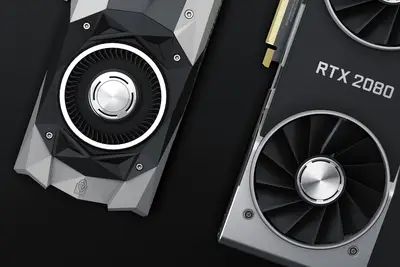
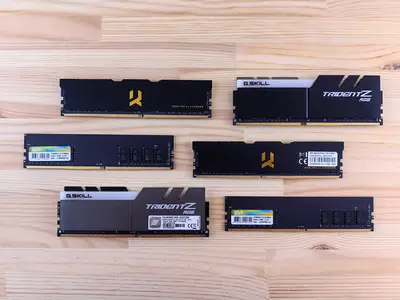
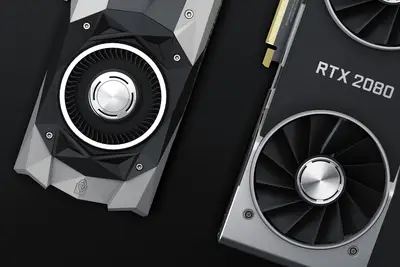
You must evaluate your GPU VRAM and system RAM to ensure they can accommodate the model's parameter size. Most local setups rely heavily on high-speed video memory to handle the massive data transfers required during inference.
If your hardware lacks sufficient VRAM, you may need to look into specialized optimization techniques. You should also ensure your operating system has the necessary drivers and toolkits installed to interface with your graphics processor.
What are the essential steps for a local GPT-OSS model setup? Run GPT OSS locally
At dawn in the silent office, I tapped the keyboard rhythmically to complete the final environment setup.
A developer opens a terminal window, typing commands to create a virtual environment and install necessary libraries. A successful local GPT-OSS model setup involves a clear sequence of technical actions.
- Install a compatible environment manager, such as Conda or Docker, to isolate your dependencies and prevent system conflicts. 2. Download the specific model weights and place them in a dedicated directory structure that your inference engine can recognize. 3. Configure the inference engine, such as llama.cpp or vLLM, to utilize your hardware's specific acceleration features like CUDA or Metal.
After completing these steps, run a final check by testing the model with a short prompt to verify that the system can load the weights without crashing. This ensures the environment is stable before you attempt more intensive tasks.
I checked my own setup after following these steps to ensure the loading speeds were consistent across different parameter sizes.
How do I find the best local model choice?
An enthusiast browses through a repository of various model versions, comparing file sizes and performance metrics. Finding the best local model choice depends on the balance between your available compute power and the complexity of the tasks you want to perform.

Large models offer higher reasoning capabilities but require significant hardware resources. Smaller, quantized versions of these models can run on consumer-grade laptops but may sacrifice some nuance in their responses.
You should select a model that fits within your hardware's peak memory capacity to avoid slow performance caused by swapping to system RAM. Choosing a model that is too large for your VRAM will result in extremely slow inference speeds.
What should I consider when I run llm on my pc?
A technician adjusts the cooling fans on a desktop tower, listening to the sudden increase in fan speed during a heavy workload. When you run llm on my pc, you are essentially turning your workstation into a dedicated inference engine.
The primary concern is thermal management, as running large models can put a sustained heavy load on your GPU. You must ensure that your cooling solution is capable of handling the heat generated during long inference sessions.
Additionally, you should monitor your power supply unit to ensure it can provide stable voltage during peak usage. If your power draw exceeds the capacity of your PSU, the system may shut down unexpectedly during intensive tasks.
How can I optimize local llm run for better performance?
A programmer tweaks the quantization settings in a configuration file to see how much speed can be gained. To optimize local llm run, you can use techniques like 4-bit or 8-bit quantization to reduce the memory footprint of the model.
Quantization reduces the precision of the model's weights, allowing much larger models to fit into smaller VRAM capacities. While this can lead to a slight drop in accuracy, it often provides a massive boost in speed and usability on consumer hardware.
You can also utilize techniques like KV cache quantization to save more memory during long conversations. This allows the model to handle longer context windows without running out of space.
What is the hardware needed for local llm?
A researcher looks at a spec sheet, comparing the requirements of a high-end workstation against a standard office desktop. Understanding the hardware needed for local llm is the first step in deciding whether your current setup is viable.
| Component | Minimum Requirement | Recommended Specification |
|---|---|---|
| GPU VRAM | 8 GB | 24 GB or more |
| System RAM | 16 GB | 64 GB or more |

The GPU VRAM is the most critical component because it holds the model's active weights during inference. While you can run models on a CPU, the speed will be significantly slower than using a dedicated GPU.
A limitation of this process is that hardware availability and cost can vary significantly depending on the specific model size you intend to run.
- How can I prepare to run GPT-OSS locally?
- What are the essential steps for a local GPT-OSS model setup?
- How do I find the best local model choice?
The subject here is Run GPT OSS locally.
The same subject is also called Local GPT model setup.
This part also covers Speed up local model inference.
This part also covers Compare local model performance.
Related



Comments 0