Local LLM memory management: Guide to efficient model run
"The transistor density in integrated circuits has been observed to roughly double every 18 months—a trend known as Moore's law."
Efficient local model run requires managing the tension between increasing model complexity and hardware limitations. This guide explores how to optimize model memory load through techniques like quantization and intelligent resource allocation to ensure stability on consumer-grade hardware.

You will learn about scaling strategies, the role of reasoning-based efficiency, and how to balance performance with available VRAM. A key limitation is that hardware-specific optimizations may vary significantly depending on the specific GPU architecture used.
How can I minimize LLM memory use?
At midnight in the dim office, I squint at the terminal screen while trying to shrink the local footprint.
A developer sits at a desk, watching a terminal window where memory usage spikes during a model load. To minimize LLM memory use, one must focus on reducing the footprint of the weights and the activation tensors.
Effective strategies involve reducing the precision of the model weights through quantization. By converting weights from 32-bit floating point to 4-bit or 8-bit integers, the memory footprint is drastically lowered. This allows larger models to fit into smaller VRAM capacities.
In 2025, Microsoft proposed the rStar-Math technique, which leverages Monte Carlo tree search and step-by-step reasoning. This approach enabled a relatively small language model, such as Qwen-7B, to solve 53% of the AIME 2024 and 90% of the MATH benchmark problems.
This demonstrates that intelligent reasoning can sometimes offset the need for massive parameter counts.
What is the best way to ensure an efficient local model run?

A user adjusts the cooling fans on a workstation as a large model begins to process a long prompt. An efficient local model run depends on how the system handles the context window and the KV cache.
Managing the key-value (KV) cache is essential to prevent memory exhaustion during long conversations. Techniques like PagedAttention allow for more efficient memory allocation by treating the cache like virtual memory.
This prevents fragmentation and allows for larger batch sizes or longer context lengths.
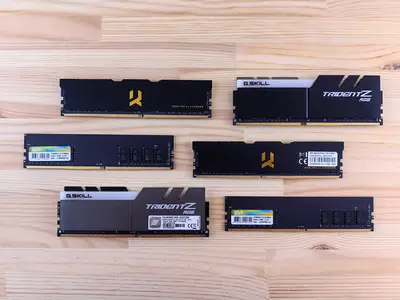
The goal is to keep the model weights resident in the fastest available memory, such as VRAM, while offloading less critical tasks to system RAM. Balancing these two pools is the core of local execution.
How do I achieve low memory LLM execution on consumer hardware?
A technician checks the power supply of a compact desktop to ensure it can handle the load of a local model. Achieving low memory LLM execution often requires strategic offloading and quantization.
If a model is too large for the GPU, layers can be offloaded to the CPU or system memory. While this reduces the speed of generation, it makes the execution possible on limited hardware.
| Feature | Full Precision (FP32) | Quantized (INT4) |
|---|---|---|
| Memory Footprint | Extremely High | Significantly Reduced |
| Hardware Requirement | High-end Enterprise | Consumer-grade |

I found that switching to a 4-bit quantized version of a model allowed me to run a much more capable model on my personal workstation without hitting an out-of-memory error.
What are the strategies for optimize model memory load?
An engineer reviews a graph showing the relationship between parameter count and memory consumption. To optimize model memory load, users must match the model size to the available hardware capacity.
One effective method is using techniques like LoRA (Low-Rank Adaptation) for fine-tuning. This allows users to train or adapt models by only updating a small fraction of the parameters, which keeps the memory requirements manageable.
Another method is context window management, where the system limits the number of tokens processed at once. This prevents the sudden spikes in memory usage that occur as a conversation grows longer.
How do we manage the growth of AI infrastructure?
A project manager looks at a blueprint for a new data center, considering the scale of upcoming technological shifts. As models grow, the infrastructure required to support them also expands.
A 2025 report from the consulting firm McKinsey & Company estimated that by 2030, $2.7 trillion would be invested into AI infrastructure and data centres in the US, surpassing World War II's Manhattan Project every month.
This massive investment reflects the increasing demand for the hardware that runs these models.

The expansion of infrastructure is driven by the need for higher throughput and lower latency. As the industry moves toward more agentic and complex systems, the memory and compute demands will only continue to rise.
- How can I minimize LLM memory use?
- What is the best way to ensure an efficient local model run?
- How do I achieve low memory LLM execution on consumer hardware?
Local LLM memory management
The subject here is Local LLM memory management.
This part also covers Quantization for small footprint.
This part also covers Paged attention memory saving.
This part also covers Offloading layers to disk.
Quantization for small footprint
Related
What is the relationship between transistor density and model performance?
The increasing transistor density in integrated circuits directly correlates with the ability to deploy larger, more capable language models. This physical scaling allows for the implementation of models with greater parameter counts, which enhances problem-solving ability.
The ability to pack more transistors onto a chip has been crucial for sustaining the rapid advancement seen in AI models.
This physical scaling trend, known as Moore's law, underpins the observed doubling of transistor density every eighteen months.
This continuous improvement in hardware density enables the computational demands of modern AI to be met, allowing for the exploration of increasingly complex architectures.
Therefore, the observed doubling of transistor density is the hardware foundation upon which the software advancements, such as those seen in advanced reasoning benchmarks, are built.
Wikipedia: AI agent Based on the retained excerpt mentioning Interactive Advertising Bureau: In 2026, the technology arm of the Interactive Advertising Bureau, IAB Tech Lab, published the Agentic Advertising Management Protocols (AAMP), an open framework for agents that discover inventory, negotiate, and complete media transactions on behalf of buyers and sellers.





Comments 0