LLM AI hijacking defense: Guide to secure model deployment
"The rapid adoption of large language models in corporate environments has introduced a new frontier of vulnerability, where the very intelligence driving business efficiency can be turned against its owners."
A robust LLM AI hijacking defense requires a multi-layered approach that integrates rigorous model evaluation, secure data handling, and continuous monitoring of prompt injection risks.
This strategy focuses on protecting intellectual property while ensuring that automated decision-making remains reliable and tamper-proof.
Key takeaways include the importance of benchmark-driven validation, the necessity of securing data flows, and the implementation of guardrails against manipulative prompting.
How can a company implement an LLM AI hijacking defense?

An IT administrator sits before a glowing monitor, scanning through lines of code to identify potential vulnerabilities in a newly deployed language model.
Establishing an LLM AI hijacking defense begins with understanding the specific attack vectors unique to generative AI, such as prompt injection or model extraction.
To build resilience, organizations must focus on securing the interaction between the user and the model. This involves setting strict input validation rules to prevent malicious instructions from overriding system prompts.
Additionally, developers should implement output filtering to ensure the model does not inadvertently leak sensitive training data or proprietary information.
Effective defense also requires a deep understanding of model behavior. According to a survey by Sentio University in early 2025, nearly half (48.7%) of 499 U.S. respondents were involved in various AI-related sectors, highlighting the massive scale of deployment.
This widespread use necessitates standardized security protocols.
By integrating these layers, a company can move from a reactive posture to a proactive one. This proactive stance involves regular red-teaming exercises to simulate hijacking attempts.
A successful AI model intrusion guard prevents attackers from manipulating the model's logic to perform unauthorized tasks.
Why is understanding AI model theft defense critical?
The analyst grips the cold desk in the dim office, realizing that a single lapse in defense could lead to the hijacking of their most valuable intellectual property.

A security analyst examines a server rack, wondering how much of the company's proprietary logic is actually contained within the model's weights.
As noted by Stanford University, a paper surveys problems and opportunities in the measurement of AI systems and their impact, based on a workshop held at Stanford University in the fall of 2019.
An AI model theft defense is essential because the intellectual property of a business is often embedded in the fine-tuned parameters of its custom models.
If an attacker successfully extracts the model or its underlying logic, the company loses its competitive advantage. This type of theft often occurs through repeated, targeted prompting designed to reconstruct the model's training data or decision-making processes.
Protecting these assets requires both technical and procedural safeguards.
Security teams must treat the model as a high-value asset, much like a database or a physical product. This means encrypting model weights and strictly controlling access to the API endpoints.
An LLM data security plan ensures that the data used to train or prompt the model does not become a liability.
Without a dedicated defense, the investment in specialized AI becomes a vulnerability. As models become more integrated into core business processes, the cost of theft rises. Protecting enterprise AI is not just about data privacy; it is about preserving the core intelligence of the organization.
How does an LLM data security plan work in practice?
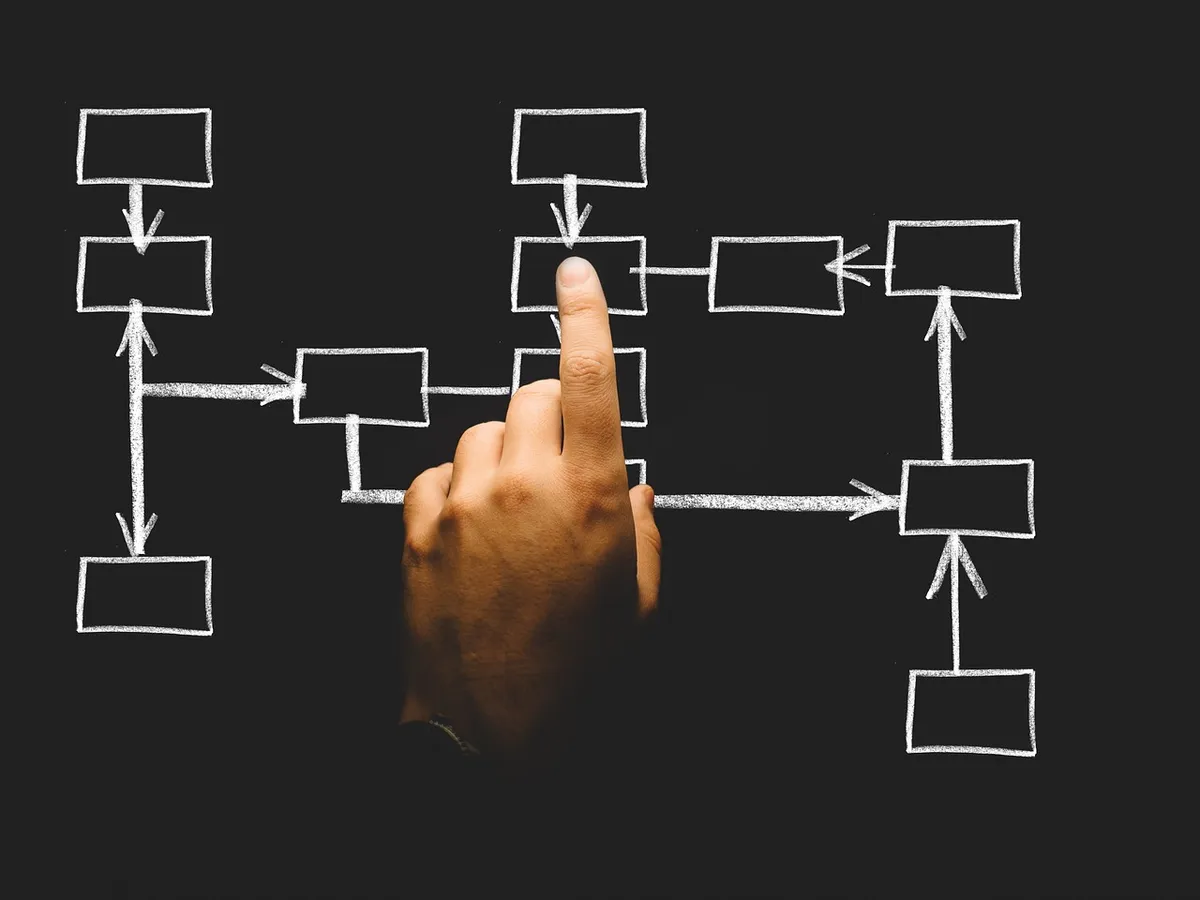
A data engineer carefully maps the flow of information from a customer database to a cloud-based language model. An LLM data security plan focuses on managing the lifecycle of data as it moves through the AI ecosystem, ensuring that sensitive information is never exposed to unauthorized entities.
The first step involves data sanitization, where personally identifiable information (PII) is stripped from inputs before they reach the model. This prevents the model from "learning" sensitive details that could be retrieved later through hijacking.
The second step is establishing secure API tunnels and authenticated access to prevent interceptive attacks.
The third step is the implementation of differential privacy or similar techniques to add noise to the data, making it harder to reverse-engineer the original inputs.
I observed during a recent security audit that even without these layers, teams often struggle to maintain a clear boundary between user input and system data.
A final check involves auditing the logs to ensure that no unauthorized data leakage has occurred through the model's responses. Securing data flow in LLMs prevents the accidental exposure of corporate secrets during routine interactions.
This structured approach turns a chaotic data environment into a controlled, secure pipeline.
What are the best methods for preventing AI model extraction?
A researcher runs a series of complex queries against a test model, looking for patterns that might reveal its internal structure. Preventing AI model extraction requires monitoring the frequency and nature of user queries to detect "probing" behavior.

Attackers often use automated scripts to send thousands of slightly varied questions to a model to map its decision boundaries. To counter this, companies should implement rate-limiting and anomaly detection.
If a single user account shows highly repetitive or patterned interaction, it may be an attempt at extraction.
Furthermore, using diverse model families can mitigate the risk of a single point of failure. For example, a company might use different models for different tasks, making it harder for an attacker to gain a complete picture of the corporate AI architecture.
Countering AI hijacking attacks requires this kind of strategic fragmentation.
Regularly updating the model and its temperature settings can also make extraction more difficult. By introducing controlled randomness, you disrupt the ability of an attacker to create a perfect digital twin of your model. This constant evolution keeps the target moving and the defense relevant.
How can we ensure the right model is chosen for security?
A procurement officer reviews a technical spreadsheet, comparing the strengths and weaknesses of various AI providers. Choosing the right model is a fundamental part of the security strategy, as some architectures are inherently more prone to certain types of manipulation.
According to a guide by Albert Schaper Academy, model names and capabilities change frequently.
When evaluating models, organizations should look at transparency and the provider's security track record. Some models are designed with stricter guardrails, while others offer more flexibility at the cost of higher risk.

An LLM comparison cheat sheet can help stakeholders navigate these trade-offs.
| Feature | High-Security Model | High-Performance Model |
|---|---|---|
| Input Filtering | Integrated/Strict | Manual/Flexible |
| Data Privacy | High (On-prem/Private) | Variable (Cloud-based) |
A balance must be struck between the capabilities required for the task and the security level needed to protect the business. I found that choosing a model solely on performance often leads to overlooking critical security gaps in the deployment phase.
The decision-making process should include a risk assessment for every new model family introduced. A robust defense strategy considers how the model's specific capabilities, such as context window or reasoning depth, might be exploited. This informed selection is the first line of defense.
- How can a company implement an LLM AI hijacking defense?
- Why is understanding AI model theft defense critical?
- How does an LLM data security plan work in practice?
Related





Comments 0